
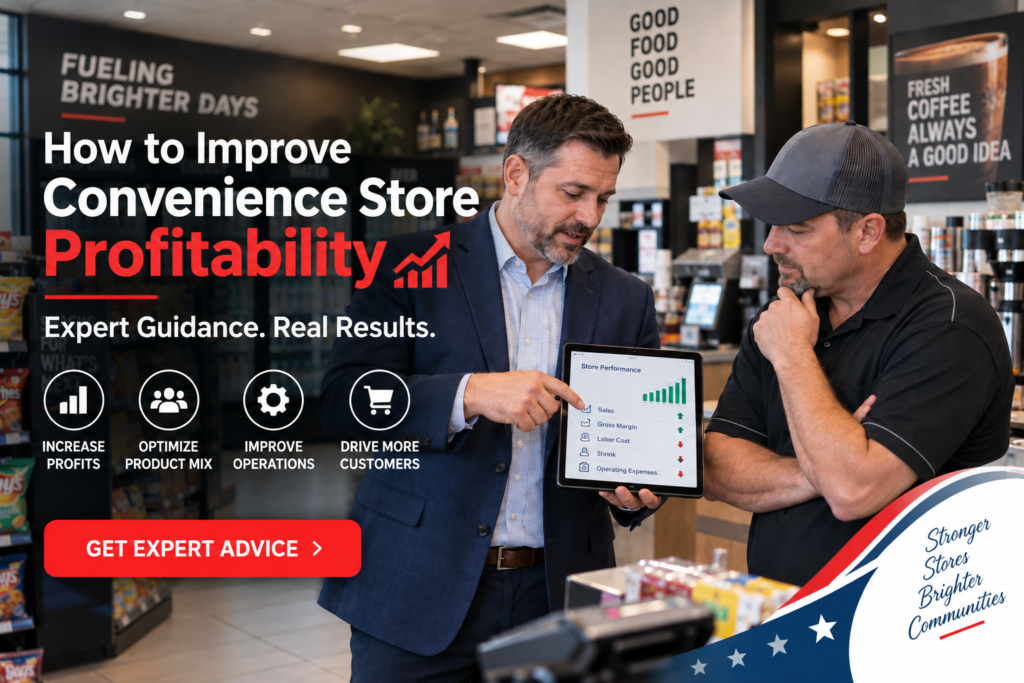
Running a profitable convenience store or gas station requires more than increasing sales. Rising labor costs, inventory shrink, vendor pricing, credit card fees, utilities, and other operating expenses can quickly reduce margins. Successful operators need to understand both sides of the business: How much the store sells and how much it costs to generate those sales.
Here are seven areas convenience store owners should regularly review to improve profitability.
Inventory is one of the largest investments in a convenience store. Too much inventory ties up cash, while too little can create out-of-stock conditions and lost sales.
Regular inventory counts and reconciliation can help identify shrink, receiving errors, expired products, and slow-moving merchandise. Owners should pay particular attention to high-value and high-risk categories such as tobacco products.
High sales do not necessarily mean high profits. Different product categories can produce significantly different margins.
Review product costs, retail prices, and gross margins regularly. When vendor costs increase, failing to adjust retail pricing can gradually reduce profitability.
Understanding which categories generate the most gross profit can also help determine where valuable shelf and display space should be allocated.
Products that remain on shelves for months consume space and working capital.
Use sales data to identify fast-moving products, slow sellers, and opportunities to introduce merchandise that better matches customer demand. Convenience store merchandising should be driven by actual store performance rather than relying entirely on vendor recommendations.
Payroll is another major operating expense for many c-stores and gas stations.
Review staffing levels by day and time, monitor overtime, and compare labor costs with store sales. The objective is not simply to reduce employee hours. Stores need enough coverage to provide good customer service while avoiding unnecessary labor expenses during slower periods.
Customer theft, employee theft, receiving errors, damaged products, incorrect transactions, and expired merchandise can all contribute to inventory loss.
Establish consistent receiving, counting, cash-handling, and inventory procedures. Regular audits can help identify discrepancies earlier and provide management with an opportunity to investigate recurring problems.
Small recurring expenses can have a significant cumulative impact on profitability.
Periodically review utilities, insurance, merchant processing fees, maintenance, vendor charges, subscriptions, equipment costs, and other expenses. Comparing several months of expenses can make unusual increases easier to identify.
Convenience store owners should regularly understand their sales, cost of goods sold, gross profit, operating expenses, and net profit.
Waiting until tax season to evaluate financial performance makes it difficult to identify problems early. Consistent bookkeeping and financial reviews provide better visibility into how the business is performing and where improvements may be needed.
Improving convenience store profitability rarely comes from one major change. Better inventory control, stronger merchandising, smarter purchasing, efficient labor management, and regular financial reviews can collectively make a meaningful difference.
Cstore Consultants provides specialized consulting services for convenience stores and gas stations, including inventory services, accounting and bookkeeping, payroll services, financial reviews, compliance support, and operational audits.
Contact Cstore Consultants to identify opportunities to reduce costs, strengthen operations, and improve the profitability of your convenience store or gas station.
Developed by: Hi-Lab Solution